
Robots of the future will only walk on two legs: facts you can’t escape


Right now, two-legged robots are emerging from labs and preparing to take their place alongside humans. They no longer look like playful exhibition prototypes—they’re sophisticated machines that confidently navigate stairs, maintain their balance on uneven surfaces, and can perform tasks where wheeled machines fail. You’re probably already familiar with Boston Dynamics’ Atlas robot and Tesla ‘s Optimus . Why do experts believe they’re the future?
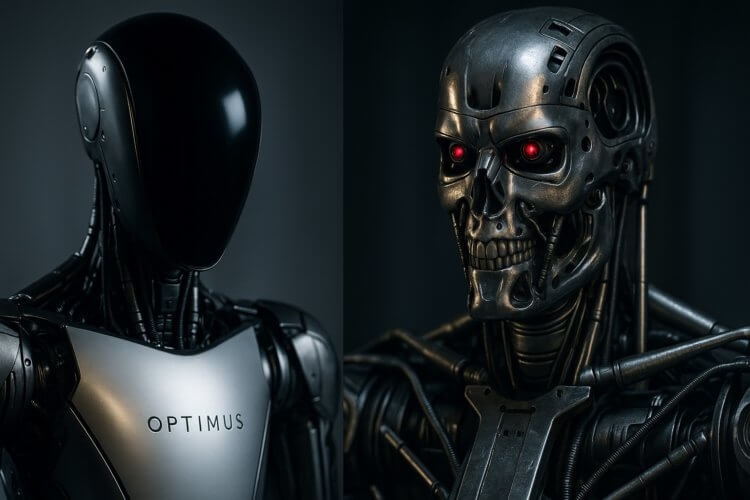
The future belongs to bipedal robots, and there is evidence for it.
Energy efficiency of bipedal robots
Why bipedal robots are considered the best was recently detailed on Habr . Here, let’s explore the topic briefly and simply.
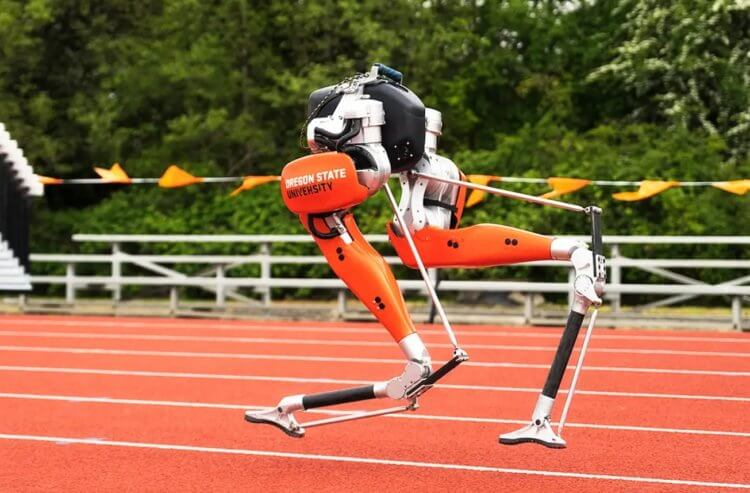
The logic is simple: evolution has already shown that bipedal walking is the most energy-efficient way to move on land. Walking requires minimal energy expenditure, and modern robots like CASSIE from Agility Robotics are gradually approaching this level.
By comparison, six-legged machines consume tens of times more energy, turning into expensive “electricity gourmets.”
Reliability of two-legged robots
But it’s not just about batteries. The more actuators a robot has, the higher the risk of failure . A bipedal robot has about twelve, and the system’s reliability is 78%, while a six-legged one is less than 70%. If production is scaled up to hundreds of thousands of units, the difference translates into billions of dollars in savings on repairs and maintenance. In other words, it’s not the romantic notion of “walking humanoid machines” that wins here, but cold mathematics.
Easy to control robots
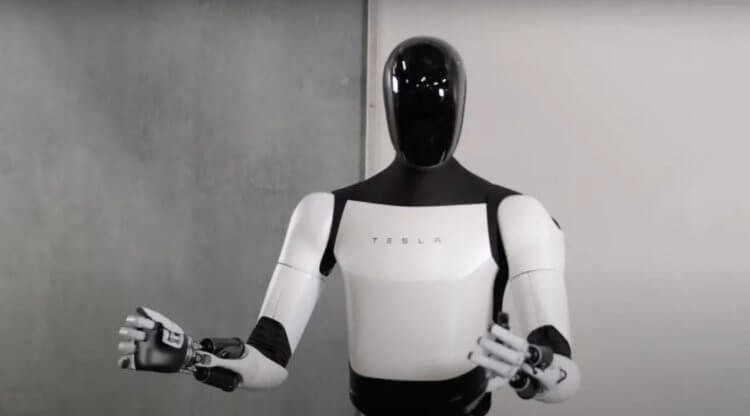
There’s also the computational aspect of the issue. The more limbs a robot has, the more complex it is to control . Six-legged algorithms require several times more operations, meaning either reaction speed must be sacrificed or expensive electronics installed. Bipedal systems are simpler, easier to optimize, and allow engineers to release new versions more quickly. This is why companies like Tesla and Agility Robotics are relying on bipedal models.
Robots in cities
Infrastructure must also be considered. Cities are built for humans: standard staircases, doorways, and narrow corridors are designed for a 15-20 cm step and a shoulder width of 80 cm. A bipedal robot feels almost at home in such conditions, maintaining up to 90% efficiency. However, multi-support platforms are forced to expend 3-4 times more energy and get stuck in passageways, like furniture being dragged sideways.
The bottom line is clear:
bipedal robots don’t just look more familiar; they’re objectively more economical, more reliable, and better suited to the human world. Their development is becoming cheaper, and mass production promises to bring the price down to the level of affordable household appliances. So the question is no longer whether they’ll appear on streets and in factories, but how quickly.








Comments are closed.